

Robot Vacuum Cleaner With Lidar
A robot vacuum cleaner equipped with lidar is equipped with a sophisticated navigational system that helps it map your home. Unlike cameras, which provide visual information, lidar shoots laser beams out and records the time they take to bounce back, providing precise distance measurements to map.
You can make your robot's navigation by removing small obstacles like cords that are tangled and ensuring all window blind cords are put away. After every cleaning session take the dustbin out of the bin and wipe the sensors.
Lidar is one type of laser rangefinder
With a robot vacuum cleaner that is equipped with lidar, you'll be in a position to keep your floors clean by putting in minimal effort. It's also intelligent and can be paired with smart devices such as Google Home's Alexa or Amazon Echo's Alexa to provide a hands-free experience. You can even use the ECOVACS Home APP to set virtual boundaries on your interactive map. You can also designate areas where you want your robot vacuum to pay close attention to. This way, it's less likely to get stuck on objects or tangle in cords. Also, you'll have a more thorough cleaning as it can navigate and scan your space with greater precision.
Lidar is a sensor that utilizes lasers to map 3D and for distance measurement. It operates by sending out an optical pulse that bounces off the objects and returns to the sensor. The sensor then collects several distance readings. This data is then used to construct a 3-D model of the area.
This technology makes robot vacuum cleaners more efficient and precise and is a feature that you'll find in many premium models. Lidar is more precise than traditional sensors, and it can detect small or flat objects, like socks or shoes that other sensors can't see. This is particularly important in areas with lots of clutter where the robot could overlook these items, causing damage to your flooring.
Based on your budget, you might have to pick between a model with a high degree of navigation, or one with additional features that will meet your needs. A few of the most popular options include a self-emptying garbage bin, mopping features built-in, as well as advanced AI image recognition for elite obstacles to avoid.
Robot vacuum cleaners also use other sensors in addition to the lidar to guide them around your home. Gyroscopes can be used to avoid bumping into objects and to create an initial room map. Other systems, such as SLAM (Simultaneous Localization and Mapping) offer more advanced maps and navigation capabilities.
The most effective robotic vacuum that has lidar is ECOVACS T20 OMNI. It is able to detect objects as tiny as 2 millimeters, and comes with dual laser sensors and a camera. This allows it to create a more precise map of a space and its advanced maneuvers to navigate allow it avoid obstacles without getting stuck or causing damage. It is able to distinguish between floors and furniture which makes it a great option for homes that are overcrowded.
It's possible to see 3D. 3D
Robotic vacuum cleaners with lidar technology can be more efficient than the standard models of roomba due to the fact that they are able see objects in three-dimensional space. The lidar technology makes use of laser beams that bounce off surfaces and return to the sensor. The sensor calculates the time it takes for the laser beam to return, and creates a map of the area. This data helps the robot to avoid obstacles and navigate more efficiently.
The latest robots are able to make use of structured light to identify edges of objects, as well as other important features of the room. This lets them enter tight spaces where other robots might have difficulty, such as the space under your chair's legs. The new technology will not only enhance navigation, but also make your robot cleaner more efficient and adaptable. Some of the new features include advanced obstacle detection and smart home integration.
It is crucial to select the best robot vacuum for your home. There are a variety of options on the market. These range from basic models of roomba to premium robotic vacuums that can mop as well as integrate with smart home systems. To choose the right model for you, consider your requirements and budget. While some robots can appear expensive, they could save you money in the long run by cutting down on cleaning time and energy.
Lidar and vSLAM are two of the most popular mapping systems utilized in robot vacuums. Lidar is more precise in mapping while vSLAM can detect obstacles more effectively. Lidar technology is expensive and requires regular maintenance, however, it is the most efficient way to ensure accurate mapping.
Both types of mapping come with advantages and drawbacks. Lidar is more accurate than cameras, however it may not work under all lighting conditions. Cameras however, are more stable and do not require much maintenance. They might not work as well in certain environments or on reflective surfaces.
Whichever you pick, Lidar or cameras, both technology types can improve the functionality of your robot vacuum. They will be able to recognize small objects like USB cables or stray socks that are often the cause of a robot's frustration. They will be able better to understand surface differences and adjust suction performance accordingly.
It is able to recognize obstacles
Lidar is an extremely powerful technology for robot vacuums that permits them to sense and avoid obstacles, particularly in dim lighting conditions. It works by sending out laser beams to the surrounding area to identify objects with reflective surfaces, such as walls, furniture and carpet. Lidar navigation is more precise than gyroscopes and VSLAM which rely on visual information to navigate. It also detects clear or transparent objects, unlike cameras, which can have difficulty perceiving them.
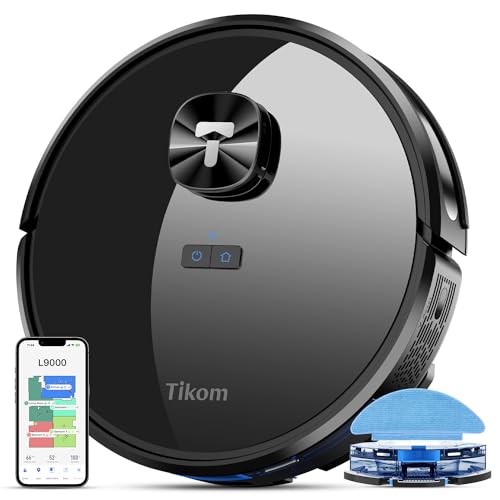
Many of the best robot vacuums come with a wide array of sensors that aid in detecting obstacles and map their environment. This can be a major advantage, since it prevents them from accidentally hitting things or falling over them when cleaning. These sensors can be used to design "No-Go Zones" that will stop your robot from getting too close to objects that you do not want it touching.
Most modern robotic vacuums use these sensors, but you should be aware of their operation prior to purchasing one. They can be tripped for example, by things connected to outlets or wires wrapped around furniture. If the vacuum is pushed through these, it may be permanently damaged. Fortunately, the majority of robots come with sensors built-in that warn them when they're about to hit an obstacle and pause automatically.
Cliff sensors are another popular feature of robots. They keep them from falling down stairs or other large elevation changes. They use infrared technology to detect objects below them and alter the robot's direction to avoid that object. These sensors are a security feature and could save you money by preventing the damage to your robot.
Lidar can increase the quality of cleaning your home by making sure that all areas are properly cleaned. It also increases the speed of cleaning. The precise mapping and real-time collision detection capabilities of lidar-equipped robots reduce the amount of time that is required to complete a cleaning session. This feature is a huge help to busy families.
It can clean in a straight-line
The best robot vacuums have sophisticated navigation features that allow them to clean and navigate your home without getting stuck on socks, wires or furniture legs. The most advanced robots use SLAM and lidar to build a real-time map of your space and avoid obstacles when cleaning. This technology is much more efficient than navigation based on sensors that can be tripped by rugs or get hung on cords. It is also possible to create zones of no-go that act as virtual walls that your robot is unable to traverse. This is useful for protecting delicate items like floor vases from dust particles.
Drop sensors are another feature worth looking for. These sensors will stop your robo-vac from falling down steps or other large height differences. This is especially helpful for families with small children or pets in the house. If you own pets, you may prefer to buy a robotic that has AI-powered cameras. These cameras are able to detect and eliminate poop piles. (See the CNET Hall of Fame story).
lidar vacuum robot should also check if your robot vacuum is compatible with smart home devices such as Alexa or Google Assistant. This makes it easier to control your robot vacuum from any location. The robot can be programmed to clean your home while you're at work.
Many robot vacuums offer a range of other useful features, such as a remote control that allows you to alter the power level and the brush mode. You can create a schedule for your robot to run frequently. This will ensure that your home stays neat and clean regardless of how busy or hurried you are.
Some of the more expensive models use laser mapping that is more effective than traditional sensor-based navigation. This technology aids the robot vac locate its way around your home, and the results are stunning. If you're looking for a budget-friendly option you might want to go with a less expensive model. A robot with the proper navigation will save you lots of time and money.